Table of Contents
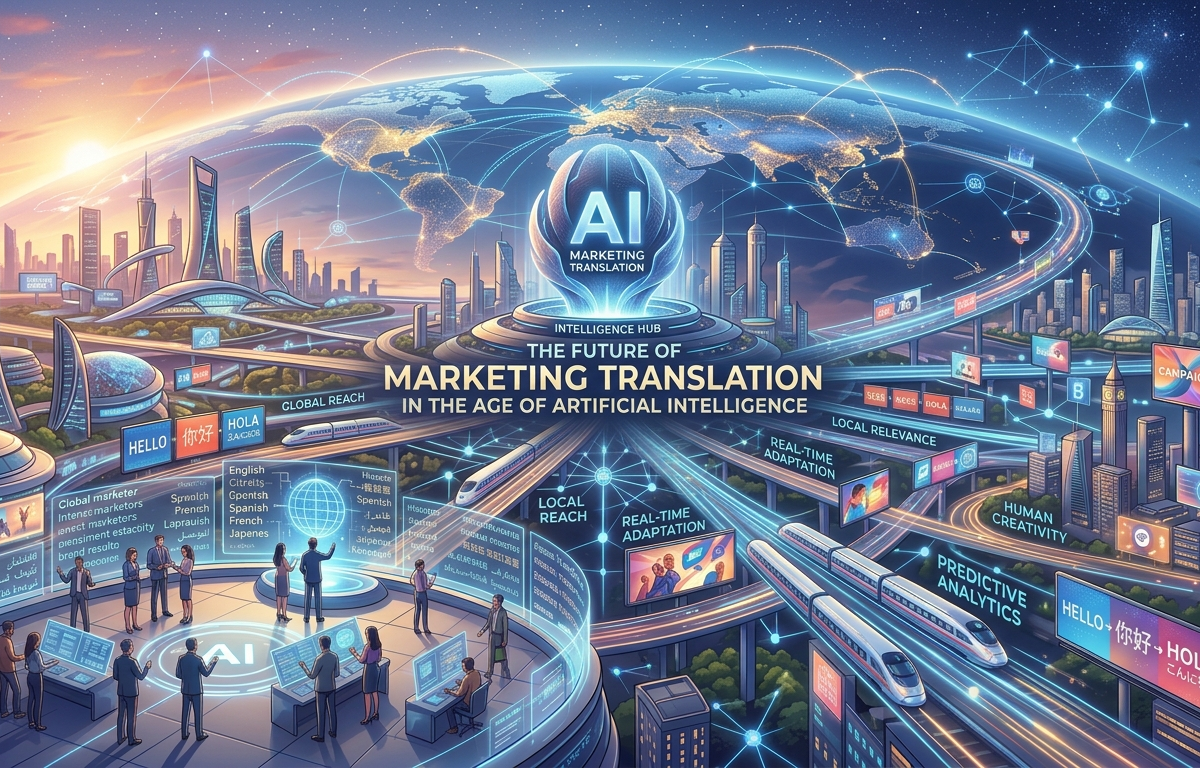
Not ago when a company wanted to expand into a new market they had to hire translators adapt a few campaigns and hope that their message was well received. Today things are very different. Companies are expected to communicate with audiences instantly and in a way that feels local, authentic and culturally aware. This is where marketing translation comes in and where artificial intelligence is starting to change the rules.
Artificial intelligence has not just made translation faster. It is changing how companies think about communication altogether. It Is No Longer About WordsAt its core marketing translation has never been just about replacing one language with another. It is about capturing tone, emotion and intent. A slogan that sounds clever in English might feel awkward, flat or even confusing in another language if translated literally.
This is why marketers started focusing on localization and transcreation which is adapting content so it feels native to each audience. Now artificial intelligence is stepping into this space. Modern tools do not just translate they try to understand context. They analyze patterns learn from content and even attempt to match tone. While they are not perfect they are getting surprisingly good at handling tasks that once required a lot of effort.
What Artificial Intelligence Is Doing Really Well
One thing intelligence does exceptionally well is speed. What used to take days can now happen in seconds. If a company launches a product it can instantly translate descriptions, ads and landing pages into multiple languages. This kind of scalability is a game changer for global companies managing huge amounts of content. Cost is another factor. Artificial intelligence tools reduce the need for translation teams for routine work making multilingual marketing more accessible even for smaller businesses. There is also the data side of things. Artificial intelligence can analyze how audiences respond to messages in different regions. Over time this helps marketers refine their content making it more relevant and engaging.
Where Artificial Intelligence Still Falls Short
For all its advantages artificial intelligence still struggles in areas that matter most in marketing. Culture for example is incredibly complex. Humor, idioms and emotional nuance do not always translate neatly. A phrase that feels warm and relatable in one culture might feel strange or even inappropriate in another. Brand voice is another challenge.
Every company has a personality whether it is playful serious, luxurious or bold. Keeping that personality consistent across languages requires a level of intuition and creativity that artificial intelligence has not fully mastered. Then there is creativity itself. Marketing often relies on storytelling, wordplay and subtle emotional cues. These are deeply skills. Artificial intelligence can assist. It rarely leads in these areas.
The Real Future: Working Together
of replacing human translators artificial intelligence is changing their role. More and more the industry is moving toward an approach. Artificial intelligence handles the large-scale tasks, such as product descriptions or basic content updates. Humans step in to refine the message ensure relevance and add creativity. In this setup translators become more than translators. They act as editors, strategists and cultural advisors. Their job is not just to translate words but to shape how a company is perceived in markets.
Personalization Is Becoming the Standard
One of the interesting shifts driven by artificial intelligence is the rise of personalized content.Of creating one campaign for an entire region companies can now tailor messages for specific audiences within that region. Language variations, references even tone can be adjusted depending on who the message is for. For example Spanish content for Spain might differ significantly from content for Mexico or Argentina. Artificial intelligence makes it easier to manage these variations without starting from scratch every time. What used to be a luxury is quickly becoming an expectation.
Questions We Still Need to Answer
As artificial intelligence becomes more involved in marketing translation it also raises some questions. There is the issue of bias. Artificial intelligence systems learn from data. If that data contains cultural or linguistic bias it can show up in the output. There is also transparency. Should audiences know when content has been generated or heavily assisted by intelligence? Some companies are starting to think about this seriously. Of course there is the impact on jobs. While artificial intelligence is automating tasks it is also creating new opportunities. The key difference is that roles are evolving. People who learn how to work with intelligence not against it are likely to stay in demand.
Adapting to What Is Next
For businesses the goal is not to replace input but to use artificial intelligence more effectively. That means choosing tools that can be trained on your company voice building workflows that include review and investing in people who understand both language and culture. It also means recognizing that technology alone is not enough. No matter how advanced artificial intelligence becomes, understanding your audience will always be the foundation of marketing.
Final Thoughts
Artificial intelligence is transforming marketing translation in ways that would have been hard to imagine a few years ago. It is faster more scalable and more intelligent.. It is not a complete solution on its own. The companies that will succeed are the ones that find the balance using artificial intelligence for efficiency while relying on human insight for creativity and cultural understanding. Because in the end marketing is not just about being understood. It is, about making people feel something.. That is still a very human skill.